Padgett
Insert
A smart bottle insert that records pill dispensing.
Our team worked on an insert that separates pills for dispensing and records when they leave the bottle. The goal was to give patients and clinicians a clearer record of medication use while keeping the bottle familiar and easy to use.
My contributions
- Insert structural design
- Sensor testing & calibration
- Sensor tuning
- Material testing

A clearer record of pill dispensing
Our project focused on tracking prescription opioid dispensing so patients and clinicians could review that record together.
Our brief identified several problems with existing smart pill bottles: stigma around using them, poor integration with clinical systems, and changes to the way people normally use a medication bottle. We aimed for an insert that could fit into that routine and record dispensing times.
I contributed to the insert’s structural design, sensor testing, calibration, tuning, and material testing. The internal design is IP protected, so this page uses the shared concept illustration, interface views, and preliminary results.
Small, simple, and easy to use
- Battery life
- ≥2 weeksLimit how often the user needs to recharge
- Pill separation
- ≤2% errorSeparate individual pills reliably
- Ease of use
- No instructions neededAn intuitive-use score of at least 4 on the team’s rubric
- Size & weight
- <65 gShorter than the medication bottle
- Cost
- ≤$5 per unitKeep the insert affordable
- Recording
- Dispensing timestampsAccurately record when pills are removed
Medication protection and data privacy were also constraints in the brief. These specifications describe the design goals; the results below are preliminary prototype tests.
How the insert works
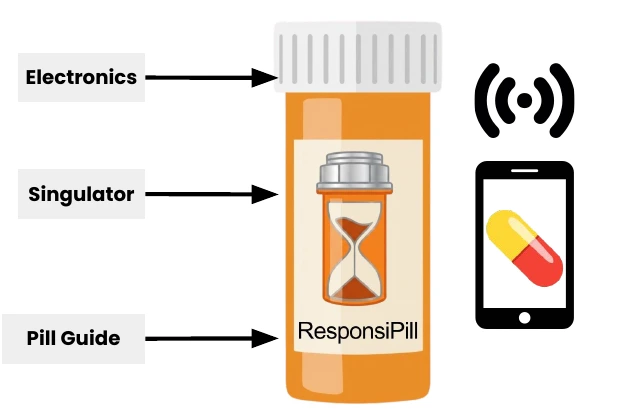
The concept has three main functions: guide pills toward the outlet, separate them for dispensing, and detect and log their removal. The structure holds these elements within the bottle.
In the proposed workflow, a pharmacy adds the insert when filling a prescription. Dispensing records then help the patient and clinician review patterns and discuss care. A record of removal does not confirm that a pill was taken.
Patient and clinician views
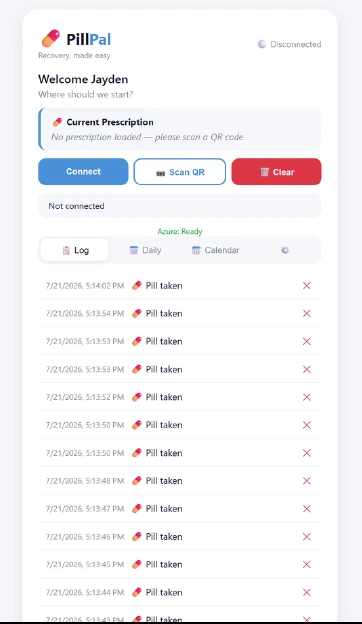
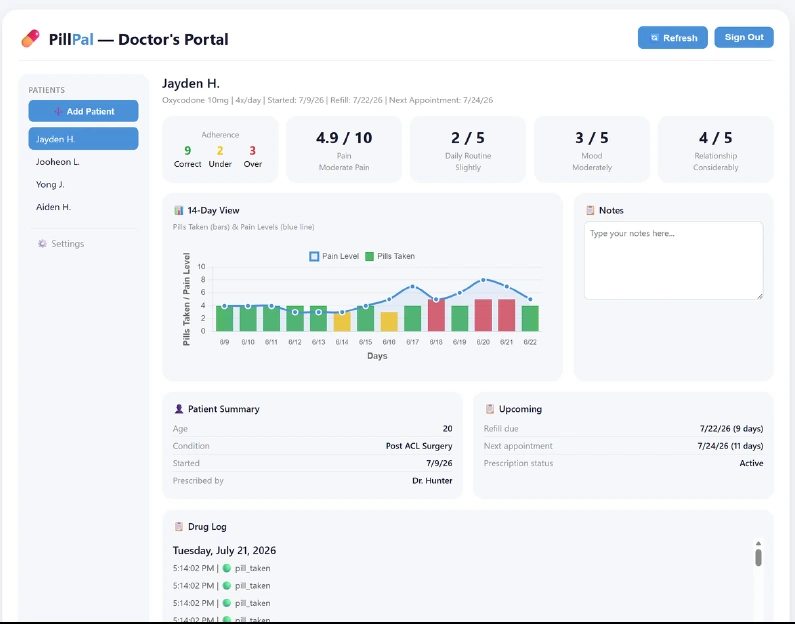
The presentation shows a patient view for dispensing logs and a clinician view with summaries and trends. Connecting these views with hospital systems such as Epic/MyChart was a future step.
Early checks of the prototype
Pills separated correctly
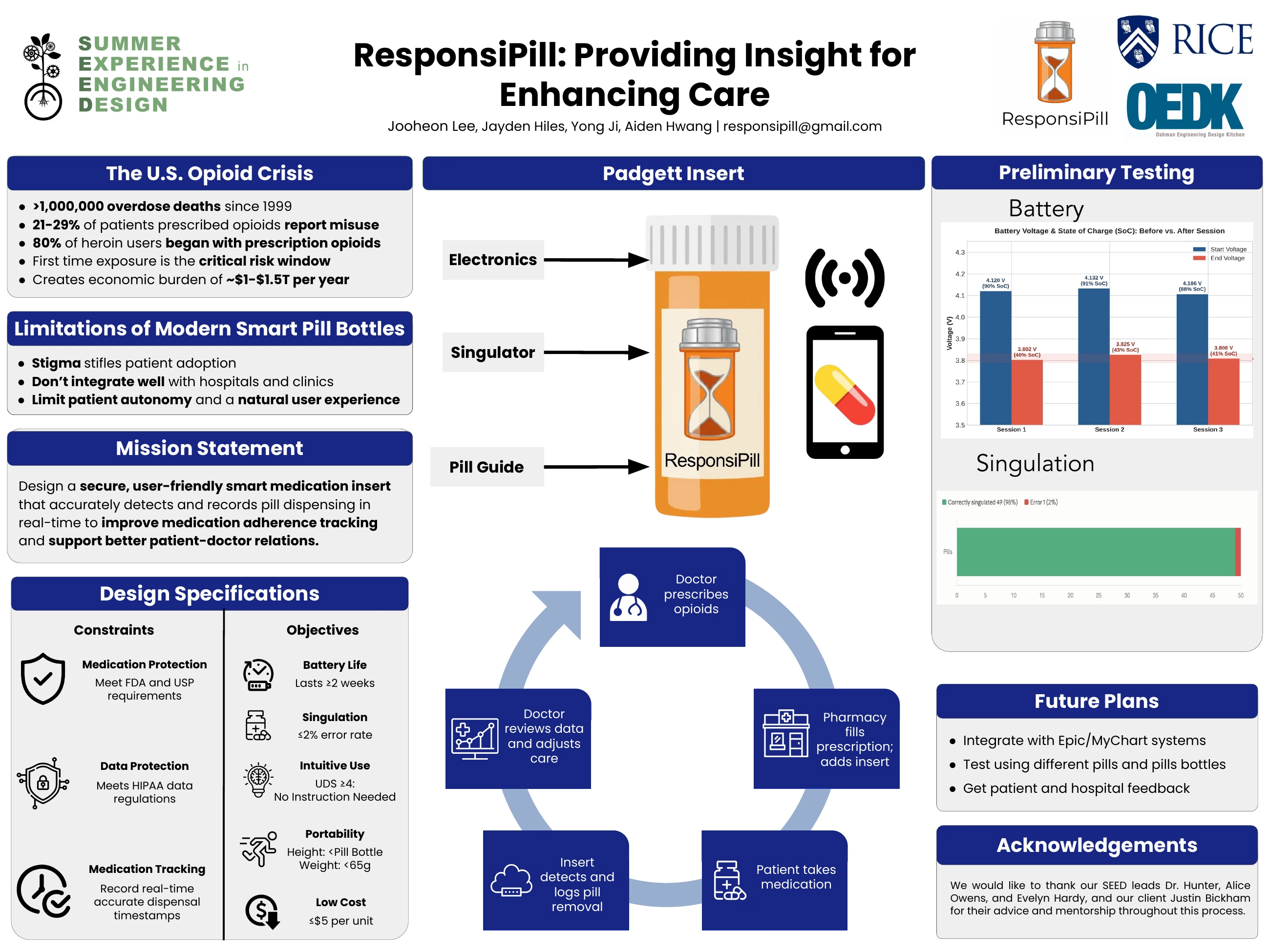
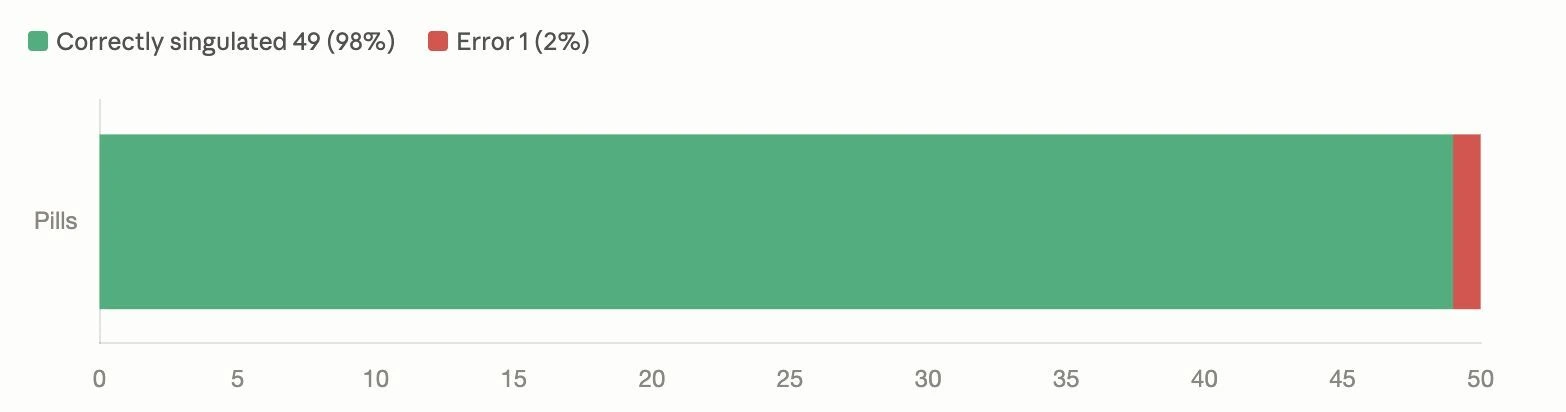
The poster records 49 successful separations and one error: a 98% success rate in this test, meeting the 2% error target for that set of trials.
Battery checks
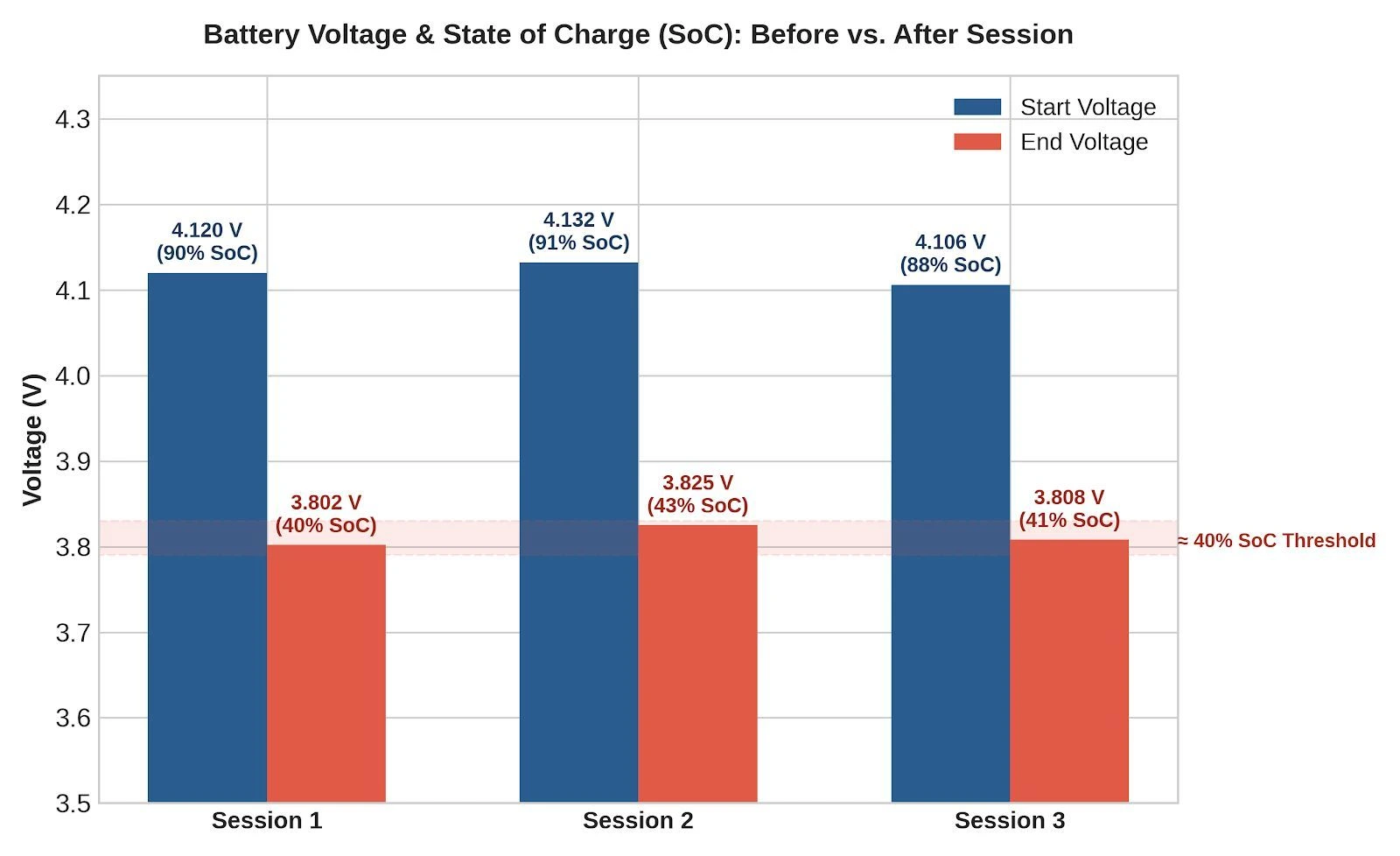
Across three sessions, the recorded battery voltage dropped from about 4.1 V to 3.8 V. These measurements show power use during the tests, but the poster does not specify session lengths, so they do not establish two weeks of operation.
Next steps
Further work included testing different pills and bottle sizes, gathering patient and clinician feedback, and exploring integration with clinical records. The presentation also proposed pilots in clinics, hospitals, and pharmacies.
Project poster