Bayou
Water Sampler
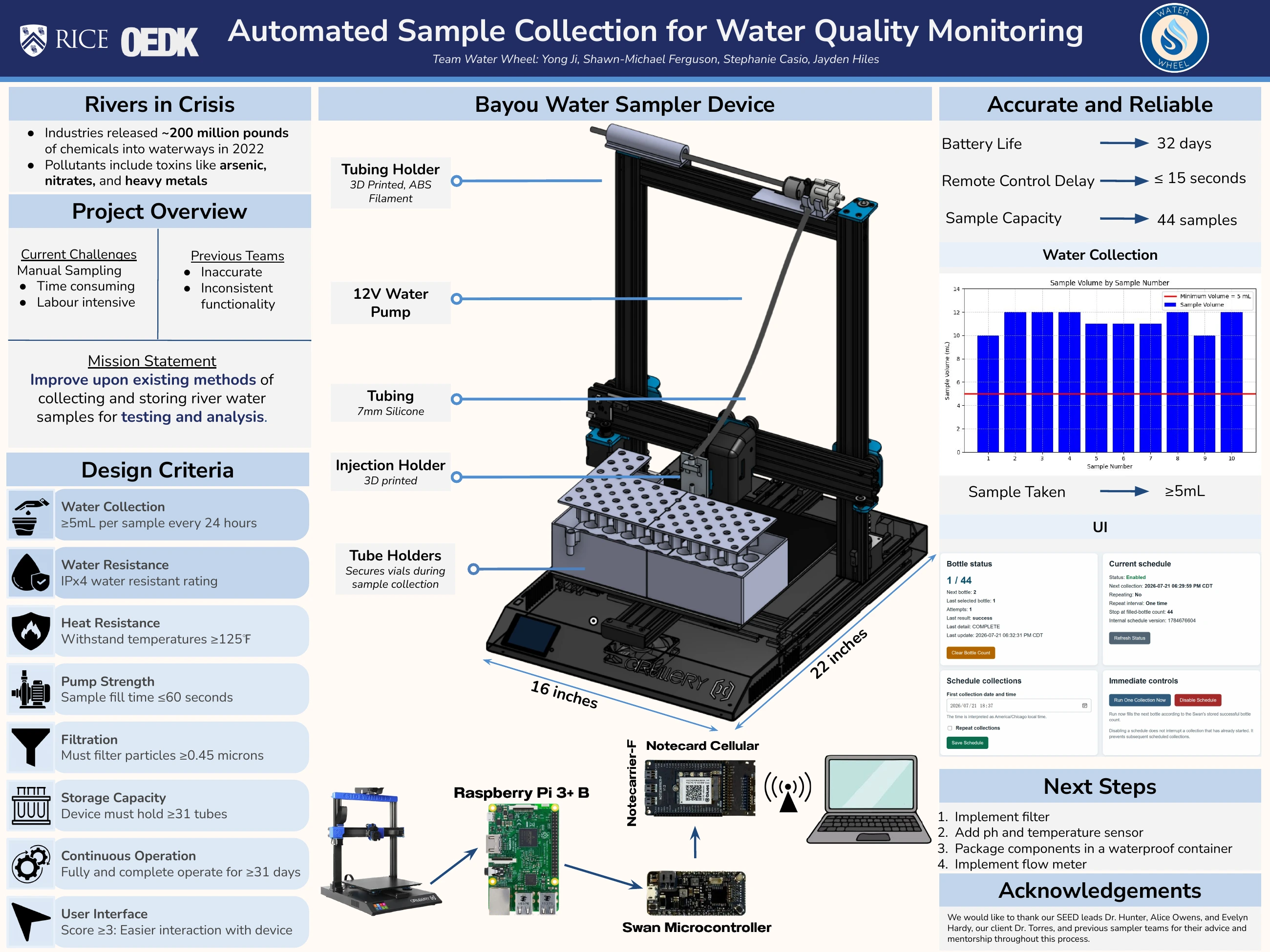
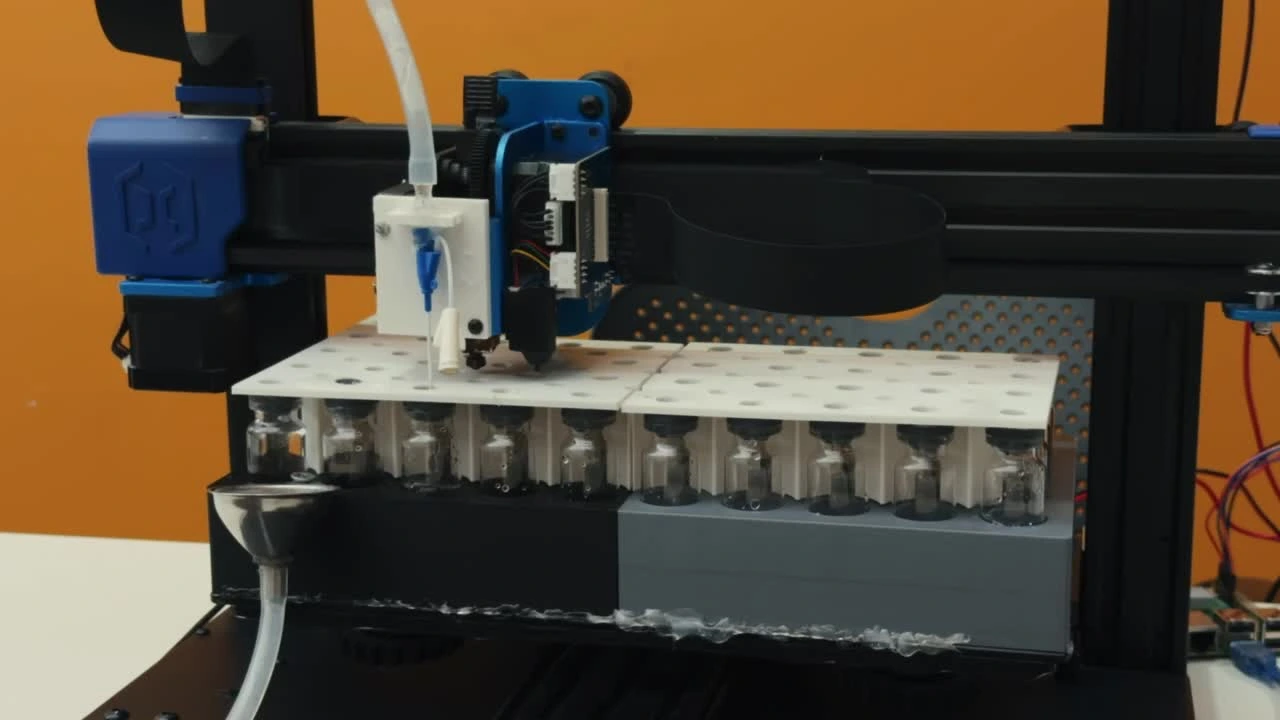
Automated water collection using a modified 3D printer.
Our team adapted a 3D printer to move a sampling needle between vials, pump water into them, and repeat the process on a schedule. The system holds 44 samples and can be controlled remotely over a cellular connection.
My contributions
- Printer conversion
- Programming
- Electrical systems
- Remote-control hardware
- Testing
- System integration
Why automate water sampling?
Researchers need water samples collected over time to study changes in river water quality. Returning to the same site for every sample takes time and effort.
We built on previous sampler teams’ work. Their devices had problems with needle positioning, pump strength, and ease of use. Our goal was to make sample collection more consistent and easier to schedule, while storing each sample in its own vial for later analysis.
This project brought mechanical design, electronics, and software together. I worked on the printer conversion, programming, electrical systems, remote-control hardware, testing, and system integration.
What the sampler needed to do
- Collection
- ≥5 mLOne sample every 24 hours
- Storage & operation
- ≥31 vialsStore at least 31 samples and operate for at least 31 days
- Pump
- ≤60 secondsFill one sample within a minute
- Water resistance
- IPX4 targetProtect the electronics from splashing water
- Heat resistance
- ≥125°FTolerate hot outdoor conditions
- Filtration
- 0.45 µmFilter particles at or above this size
The interface also needed to make scheduling and checking the sampler easier. These were project targets; the filter and waterproof enclosure still needed to be added at the end of the project.
From printer to sampler
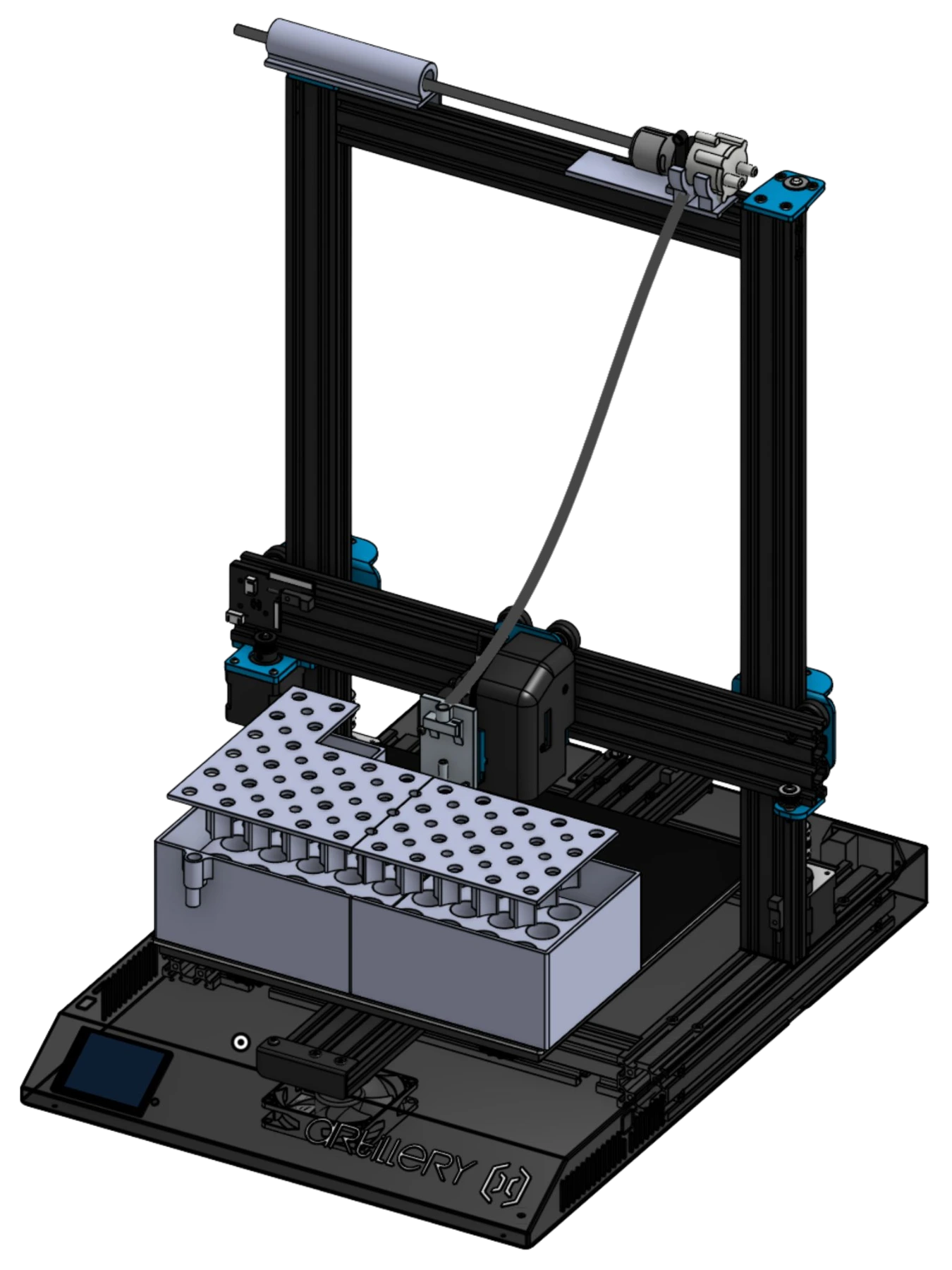
The printer’s existing motion system moves the needle between sample locations. We added a needle holder, vial holders, a tubing guide, and a 12 V pump. The vial layout provides 44 sample positions within a footprint of about 16 × 22 inches.
G-code controls the printer’s movement. The software raises the needle before moving sideways, lowers it only at the purge or sample location, and coordinates pumping with the motion.
A collection cycle
- Prepare: home the printer and move the needle to a safe travel height.
- Purge: move to the waste position and pump water through the tubing.
- Collect: move to the selected vial, lower the needle, and fill it.
- Finish: raise the needle, switch off the motors, and report the result.
Electronics and software
- Raspberry Pi
- Runs the Python listener and collection script, sends movement commands to the printer over USB, and controls the pump.
- Blues Swan
- Handles the schedule, wakes and powers the Pi for each collection, and coordinates shutdown afterward.
- Notecard & Notehub
- Carry settings and collection results over a cellular connection, linking the sampler to the web interface.
The filled-vial count advances only after a successful collection. If a run fails, the next scheduled attempt uses the same vial. Before cutting power, the Swan waits for a signal that the Pi has shut down safely.
Schedule and check a collection
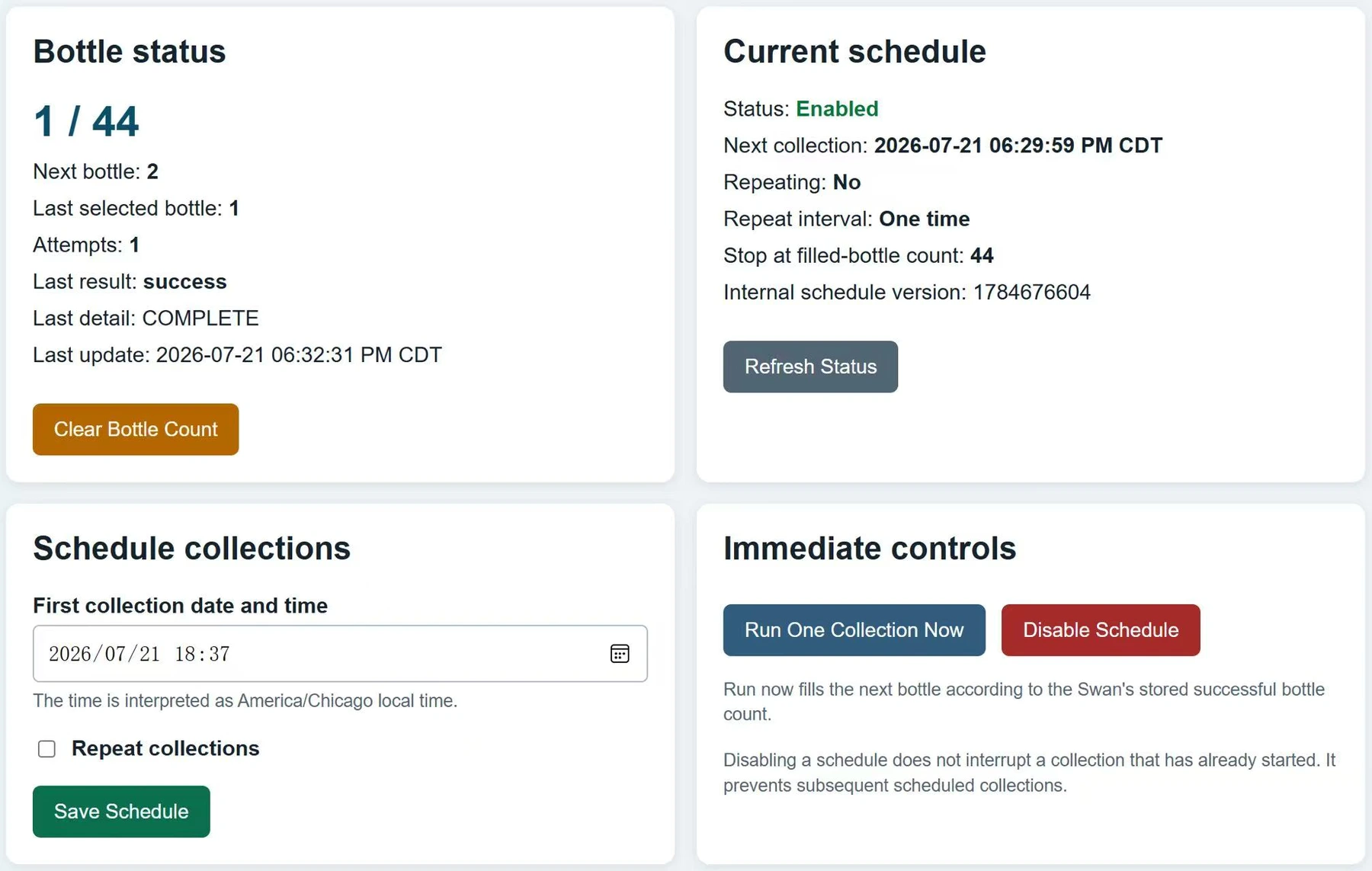
The Flask interface supports a single collection or a repeating schedule, an immediate run, and a target number of filled vials. It shows the next collection time, how many vials are filled, and the latest result.
Between collections, the system shuts down the Pi and returns the Swan to sleep. This reduces the power used while the sampler is waiting for its next run.
Checking collection and control
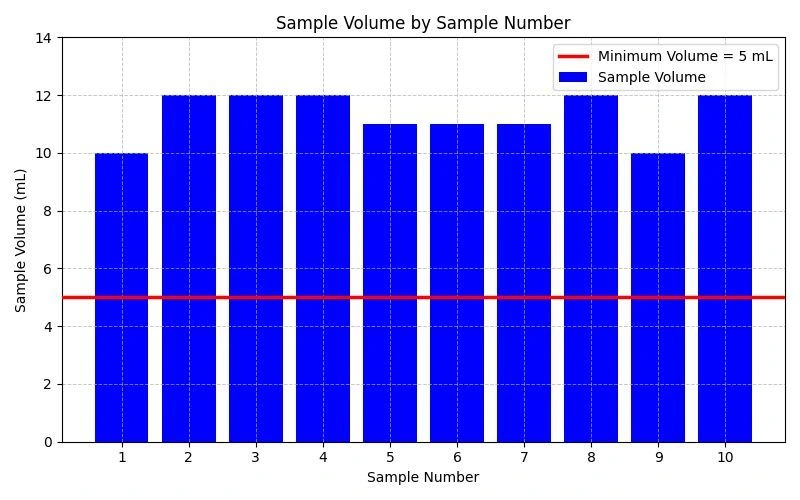
The final poster’s ten-sample test shows volumes of 10–12 mL, all above the 5 mL minimum. The presentation also reports sample collection in under one minute after the pump upgrade.
Other poster-reported results were a remote-control delay of 15 seconds or less, 44-sample capacity, and 32 days of battery life.
The operating procedure includes checking the motion with the pump disconnected before collecting water. This lets us verify vial positions and needle clearance without pumping into the wrong place.
 Watch the sampler test
What remained to be done
The next steps were to add the filter, pH and temperature sensors, a flow meter, and a waterproof enclosure. These additions would help prepare the sampler for outdoor water-quality studies.
Project poster